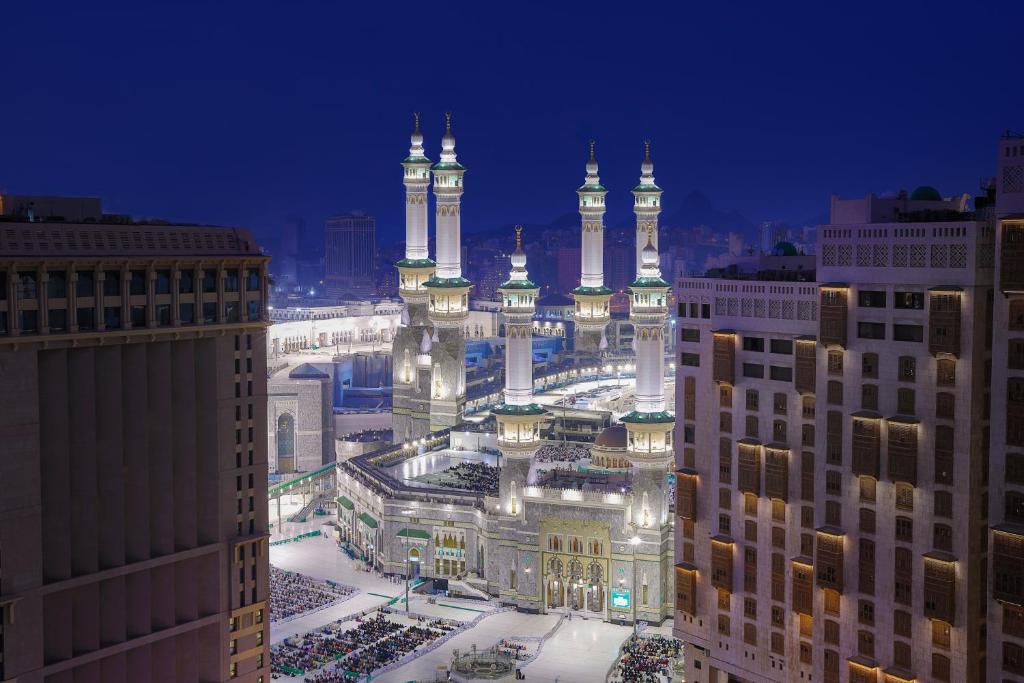
Distance from Jumeirah Jabal Omar Makkah To Haram
Distance from Jumeirah Jabal Omar Makkah To Haram — practical, evergreen guidance from our licensed Umrah specialists, written for pilgrims booking hotels in Makkah near Haram and our hotels in Madinah near the Prophet's Mosque. Every claim in this guide is verified against current Saudi Ministry of Hajj guidance and our own operational data from thousands of completed Umrah journeys. If you're planning your trip now, jump to our all-inclusive Umrah packages or read related deep-dives in the section below. Questions? Our WhatsApp team replies in under 30 seconds, 24/7.
Here is the Things You Need to Know Before Booking Jumeirah Jabal Omar Makkah Hotel in Makkah Distance from Jumeirah Jabal Omar Makkah To Haram A Sacred Root Near the Haram For Umrah and Hajj Pilgrims setting forth to Makkah, Saudi Arabia, choosing a hotel is like planting a seed—a foundation that steadies your spirit
Quick overview
Distance from Jumeirah Jabal Omar Makkah To Haram: quick overview
Here is the Things You Need to Know Before Booking Jumeirah Jabal Omar Makkah Hotel in Makkah Distance from Jumeirah Jabal Omar Makkah To Haram A Sacred Root Near the Haram For Umrah and Hajj Pilgrims setting forth to Makkah, Saudi Arabia, choosing a hotel is like planting a seed—a foundation that steadies your spirit
- The hotel is roughly 350 metres from Masjid al-Haram.
- Walking takes about 5–7 minutes in good conditions.
- The shuttle ride is about 2–3 minutes, plus waiting time.
- Distance on a map doesn’t count lift waits, security, or crowds.
- Families and elderly guests should allow extra time for travel.
- 🛡️ Licensed Travel Agency
- ⭐ 5-Star Rated Service
- 🏆 Best Umrah Service
- ✅ Verified Information
Key Takeaways
- The hotel is roughly 350 metres from Masjid al-Haram.
- Walking takes about 5–7 minutes in good conditions.
- The shuttle ride is about 2–3 minutes, plus waiting time.
- Distance on a map doesn’t count lift waits, security, or crowds.
- Families and elderly guests should allow extra time for travel.
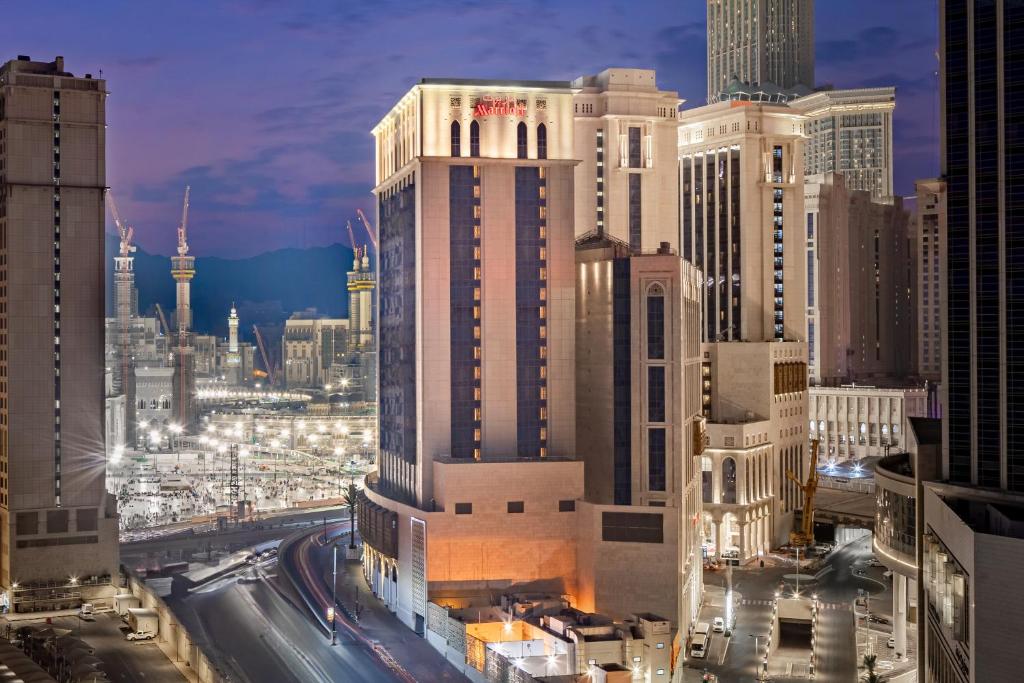
Jumeirah Jabal Omar Makkah is approximately 350 metres from Masjid al-Haram. In ordinary conditions, allow around 5–7 minutes on foot or roughly 2–3 minutes by hotel shuttle, although crowds, lift queues and the entrance you use can make the full door-to-prayer-space journey longer.
If you are considering the Jumeirah Jabal Omar Makkah Hotel, the location is close enough for most able-bodied pilgrims to walk regularly. The more useful question, especially for families and older travellers, is not simply how many metres it is. You need to know what that walk feels like at prayer time, whether everyone in your group can manage it, and how much extra time to leave.
How far is the hotel from the Haram in practical terms?
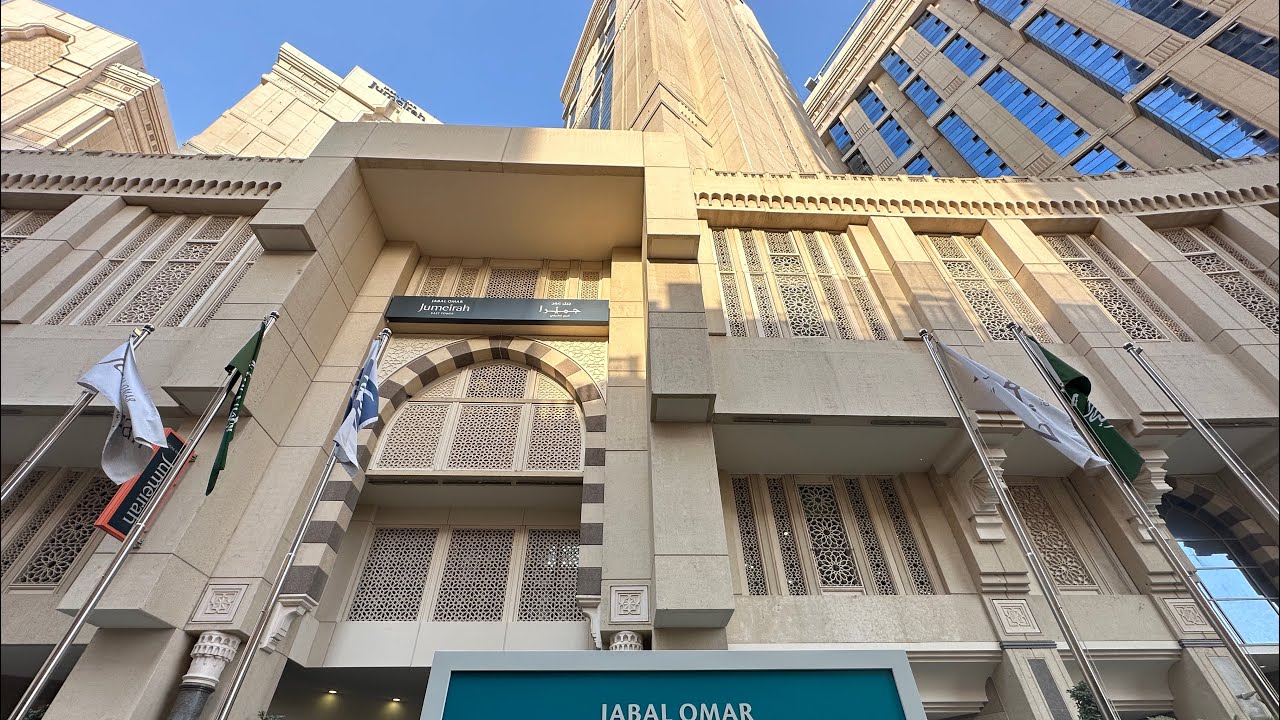
The commonly quoted distance from Jumeirah Jabal Omar Makkah to the Haram is about 350 metres, or 0.35 kilometres and 0.22 miles. The hotel is within the Jabal Omar development, with the usual walking approach leading towards the King Abdul Aziz Gate side of Masjid al-Haram.
On a map, 350 metres looks very short. It is. But this is where people get it wrong: the mapped distance does not include the time spent waiting for a hotel lift, crossing busy pedestrian flows, passing security and walking inside the vast mosque complex to your chosen prayer area. Five to seven minutes is a fair estimate for the outdoor section in light conditions, not a guarantee that you can leave your room seven minutes before the iqamah.
For a fit adult carrying very little, the route is manageable several times a day. With an elderly parent, a child who walks slowly, a wheelchair or a pushchair, we usually tell families to judge the hotel by the slowest person in the group. A short distance can still feel demanding after Tawaf, during hot weather or when thousands of worshippers are moving in the same direction.
Visitors arranging travel to Makkah, Saudi Arabia should also check current entry, visa and pilgrimage requirements separately. A conveniently placed hotel helps with daily movement, but it does not replace the practical planning needed for Umrah or Hajj.
Quick comparison: walking distance and nightly rates
Here’s how these hotels compare on the two things pilgrims ask about first — how far you’ll walk to the Haram, and where nightly rates start.
| Hotel | Walk to the Haram | Rating | Nightly rate |
|---|---|---|---|
| Jumeirah Jabal Omar Makkah | 5 min walk | 5-star | From $199 |
| Makkah Hotel | 1 min walk | 5-star | — |
Rates start from the lowest room type and move with the season, so treat them as a guide rather than a quote.
Should you walk or use the shuttle?
Walking is usually simplest for able-bodied pilgrims
The normal walking estimate is 5–7 minutes between the hotel area and the Haram edge. In quieter periods, walking often saves the trouble of waiting for transport. You can leave when you are ready, carry only what you need and return to the hotel between prayers without planning around a vehicle timetable.
Wear supportive sandals or walking shoes that are already broken in. New footwear is one of the most avoidable Umrah mistakes; even a small blister becomes miserable when you add Tawaf, Sa’i and repeated hotel journeys. Keep a lightweight shoe bag in your pocket, plus water, tissues and any medicine that must stay with you. Avoid taking a large day bag unless there is a genuine need.
The route itself is straightforward, but the pace changes near prayer times. People may stop suddenly, families can become separated and security staff may redirect pedestrians towards a different entrance. Agree on a meeting point before leaving the hotel. “By the gate” is too vague in a mosque of this size; choose a clearly named landmark that everyone can recognise.
For children, a pushchair can be useful outside but awkward in dense crowds and lifts. Do not assume every route will remain equally convenient throughout the day. If you need step-free access, ask the hotel which exit and Haram approach is currently easiest rather than relying only on a map.
The shuttle can help, but waiting time matters
The shuttle journey is generally described as around 2–3 minutes. That makes it useful for elderly pilgrims, guests with limited mobility and families trying to reduce walking in the heat. The vehicle time, however, is only one part of the calculation. You may need to wait for the next departure, queue to board and then walk from the drop-off point into the mosque.
Shuttle arrangements can change according to prayer timings, crowd controls and local traffic management. Confirm the operating hours and pick-up point with reception after checking in. Ask specifically about the return journey as well. Many guests remember to check how they will reach the Haram but only discover later that the return stop is not exactly where they expected.
At busy times, do not wait until the last practical minute and assume a seat will be available. If a member of your group cannot stand comfortably in a queue, leave earlier or arrange an alternative. The shuttle is helpful support, not something on which every prayer plan should depend without checking.
How early should you leave for Salah?
For a routine prayer outside the busiest periods, leaving the room well before the nominal five-to-seven-minute walking time gives you room for lift delays and security. Fajr may feel physically easier because of the cooler air, but lifts can become busy as the entire hotel wakes and leaves within a narrow window. Maghrib brings a different problem: everyone is watching the same clock.
During particularly crowded periods, including Ramadan and Hajj, allow considerably more time. Access routes may be controlled, preferred prayer areas can fill, and you may be directed elsewhere. If praying inside a particular part of Masjid al-Haram matters to you, arriving early is far safer than trying to push through a moving crowd.
Heat also changes the calculation. A seven-minute walk in comfortable conditions does not feel like the same walk under strong midday sun, especially after worship. Carry water where permitted, use a light umbrella if appropriate and avoid loading elderly relatives with bags. A small amount of preparation makes this short route much easier.
Why does a 350-metre location make a difference?
Staying close to Masjid al-Haram gives you options. You can return to the room to rest, change clothing, take medicine or help a child settle without turning the trip into a lengthy transfer. For pilgrims performing Umrah, that flexibility matters after Tawaf and Sa’i, when the walk back often feels longer than the walk out.
It can also make attendance at the five daily prayers more realistic. A distant hotel may provide transport, but fixed departure times and traffic add another layer of organisation. At Jumeirah Jabal Omar Makkah, many guests can choose between walking and taking the shuttle according to their energy that day.
There is still a trade-off. “Near the Haram” does not automatically mean every room has an equally quick exit. Large hotels have long corridors, multiple towers and busy lift banks. A room farther from the most useful lift can add several minutes. If mobility is a concern, request a room positioned for easier access, while understanding that requests depend on availability.
Will the location work for elderly pilgrims and families?
For many families, yes. The short outside distance is a genuine advantage, and the shuttle provides another option. But suitability depends on the person, not the number on the map. Someone who can walk 350 metres at home may struggle after a long flight, in heat or following the physical effort of Umrah.
Before travelling, check whether an older relative can manage standing, gradual slopes and crowded lift areas. Bring regular medicines in hand luggage, along with prescriptions or supporting paperwork where needed. A folding walking stick, compact wheelchair or other mobility aid may be sensible, but confirm airline and hotel arrangements beforehand.
Families with young children should pack lightly for each Haram visit. A small change kit, wipes, water and one spare layer are usually more useful than a heavily packed pushchair. Put the hotel name and a contact number in each child’s pocket. Mobile signals and batteries are not a substitute for a simple written contact card.
If travelling as a group, avoid making everyone move at the pace of the fastest walker. Split into sensible smaller groups if necessary, with one responsible adult assigned to older relatives or children. Agree whether the return will be on foot or by shuttle before leaving, because changing plans in a crowd causes confusion.
What are the rooms actually useful for?
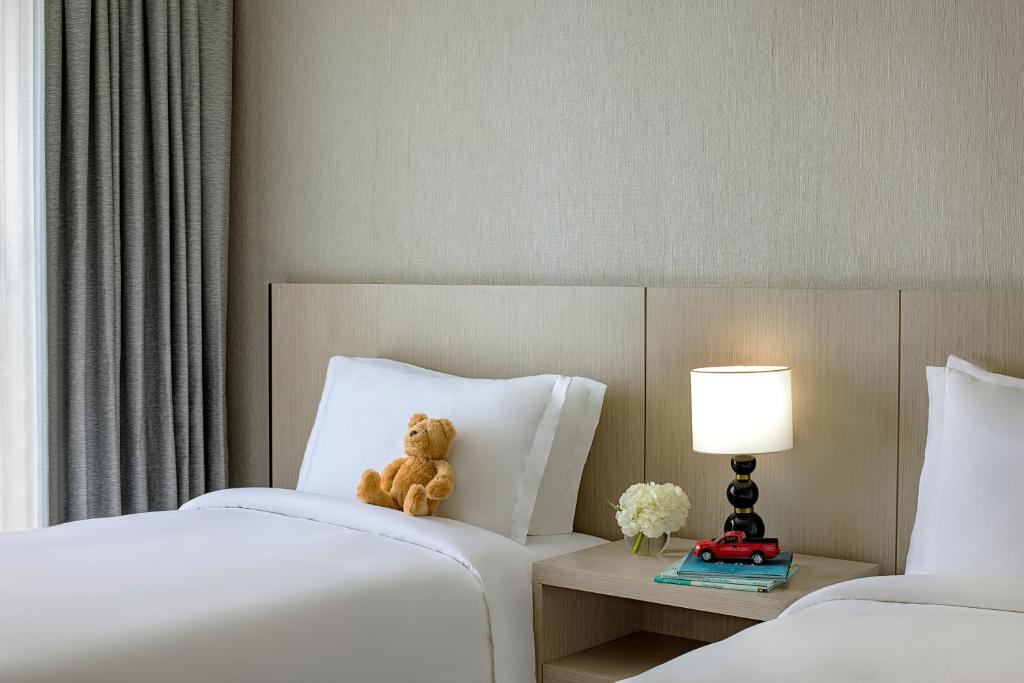
Jumeirah Jabal Omar Makkah is presented as a five-star hotel with a range of rooms and suites. The practical benefit is having a comfortable place to recover between prayers, particularly for guests staying several nights or travelling with relatives who need more rest.
Room categories include standard and deluxe options, family accommodation and suites. Listed facilities include internet access, flat-screen televisions and comfortable bedding, with views varying by room. Do not assume that every category faces the Haram. If a particular view, bedding layout or connecting arrangement matters, read the exact room description and obtain written confirmation before paying.
For families, floor space often matters more than decorative extras. Check the actual sleeping arrangement, maximum occupancy and whether an extra bed leaves enough room for luggage. Four large suitcases can make an otherwise pleasant room difficult to use. Keeping one small bag ready for the Haram also stops the whole family unpacking and repacking for every prayer.
Are the premium suites worth considering?
Premium suites are intended for guests who want more living space and additional services. Some descriptions may include balconies or enhanced views, but features vary by booked category. Confirm exactly what is included rather than relying on photographs from a different suite type.
A suite can be worthwhile when several family members need a shared sitting area, or when an elderly guest spends more time in the hotel. For a solo pilgrim who expects to be out for most of the day, the extra space may have little practical value. Location within the building can be just as important as room size.
What should you know about meals?
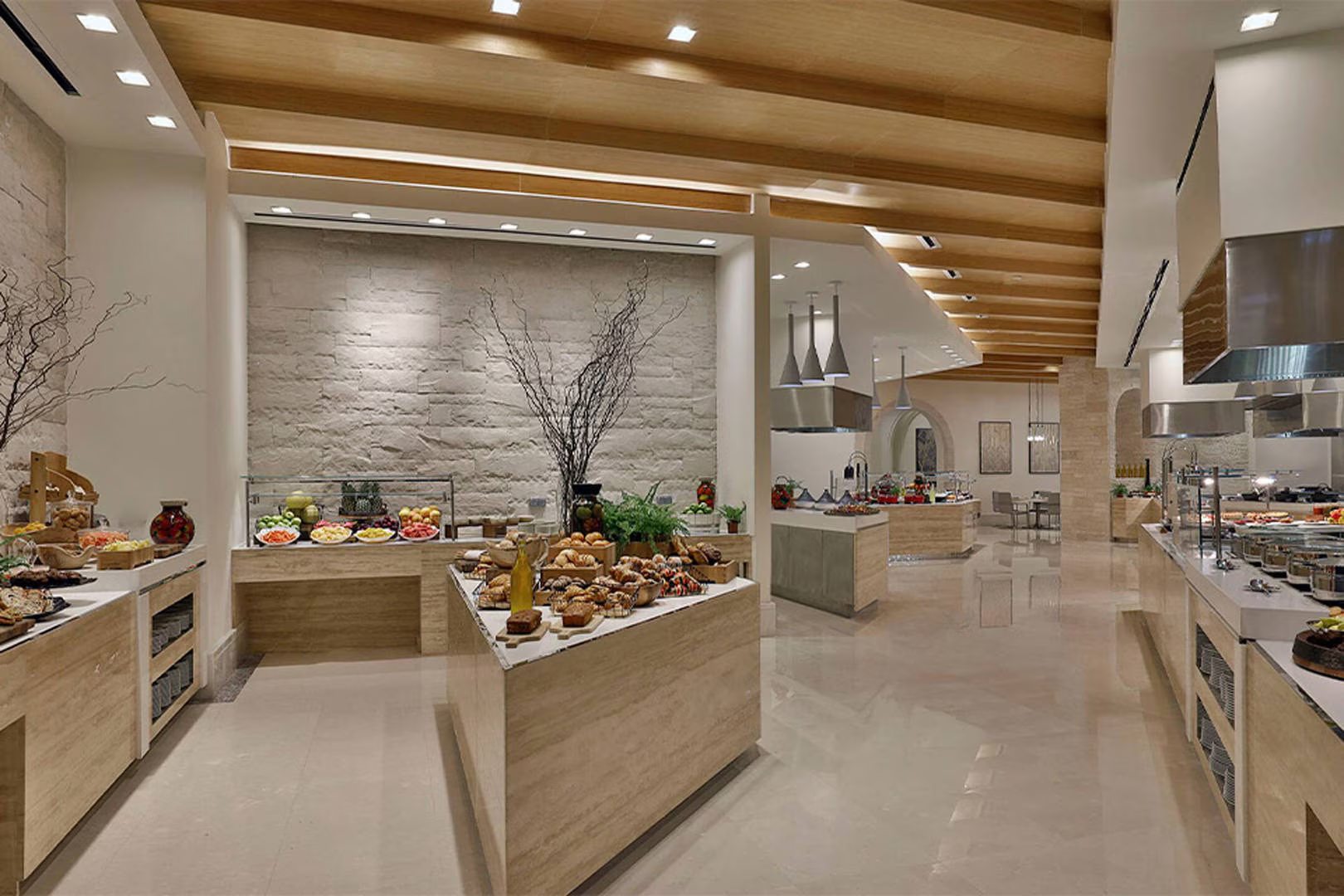
The hotel has dining options serving Arabic and international food, including breakfast and main meals. This is convenient when the group is tired, particularly after returning from evening prayers. It also avoids sending one person into a busy surrounding area to find food for everyone.
Check the meal basis on your reservation. Breakfast included, half board and room-only bookings are not the same, and meal times may affect whether you can eat comfortably around Salah. If anyone has allergies or a medically restricted diet, contact the hotel directly rather than assuming a buffet label gives enough information.
Keep a few simple snacks in the room for children or guests who take medicine with food. Choose items that travel well and do not create a mess. During busy periods, arriving at a restaurant at the same moment as every other pilgrim can mean queues, so eating slightly earlier or later may be more comfortable where prayer plans allow.
Which hotel facilities matter during Umrah?
The hotel lists modern guest facilities, including Wi-Fi, concierge assistance, meeting spaces, dining venues, fitness facilities and shuttle transport. Some premium services and wellness treatments may also be available. Facilities can change or operate at limited times, so confirm anything essential directly with the hotel.
In practice, most Umrah guests care about reliable lifts, housekeeping, breakfast timing, drinking water and quick access in and out. A gym may appeal to some travellers, but Umrah already involves substantial walking. Rest and hydration are usually the better priority if your legs are tired.
Ask reception how the building is organised on the first day. Find your nearest useful lift, the shuttle collection point and an alternative exit. Take a photograph of your tower or floor details. Large properties can be disorientating when you return tired after Isha.
Can the hotel be used as a base for a wider pilgrimage?
The location works well as a Makkah base because Masjid al-Haram remains within walking or short shuttle distance. Visits to Mina, Arafat or other sites require separate transport arrangements and should not be confused with the short hotel-to-Haram journey. During Hajj, official movement plans and access controls take priority over ordinary hotel routines.
Madinah is a separate intercity journey, not a quick extension of a Haram visit. Plan it independently, allowing for transport, luggage and hotel check-in. Al-Masjid an-Nabawi is the focus there, while Jumeirah Jabal Omar Makkah is primarily useful for the Makkah portion of the pilgrimage.
Do not overfill the itinerary. First-time pilgrims often schedule visits immediately after Umrah and then find the group is too tired to enjoy them. Leave room for sleep, meals and unplanned delays. Being close to the Haram is most valuable when the schedule remains flexible enough to use that proximity.
What should you check before reserving?
Start with the exact room category, cancellation conditions and meal plan. Then confirm bedding, occupancy and whether your group needs connecting rooms, step-free access or a room near the lifts. A Haram view is pleasant, but easy movement may be more valuable for an older traveller.
Ask about the current shuttle schedule rather than treating the two-to-three-minute estimate as a fixed service promise. Also check standard check-in and check-out arrangements, particularly if your flight arrives early or leaves late. Sitting with luggage for several hours is tiring after a pilgrimage.
Reservations can be reviewed through HotelsInMakkah.com. Compare the full terms, not just the headline room rate. If you use another listing or package, make sure the hotel name, room type and number of guests all appear correctly on the confirmation.
Offers may include meals, upgraded accommodation or other benefits, but packages vary. Read what is actually included and whether the booking can be changed. A cheaper non-refundable room is not always good value if flights or visa arrangements are still uncertain.
So, is the location genuinely convenient?
Yes, for most pilgrims the approximately 350-metre distance is convenient. A normal walk of 5–7 minutes gives able-bodied guests useful independence, while the roughly 2–3-minute shuttle journey can reduce effort for families and older travellers.
Just keep the figures in perspective. Your room-to-prayer-space time will usually be longer once you include lifts, waiting, security and movement inside Masjid al-Haram. Plan around the real group, pack lightly and leave early. That is what turns a close hotel into a genuinely practical base.
If you decide the property suits your needs, another reservation route is www.hotelsinmakkah.com. Whichever booking channel you use, retain the confirmation offline and carry the hotel address for arrival.
Frequently asked questions
1. How far is Jumeirah Jabal Omar Makkah from Masjid al-Haram?
The quoted distance is approximately 350 metres. Most able-bodied pilgrims can cover the outdoor route in around 5–7 minutes, but the complete journey from the room may take longer because of lifts, crowds and mosque entry procedures.
2. Can I walk from Jumeirah Jabal Omar Makkah to the Haram?
Yes. Walking is practical for many guests and is often simpler than waiting for transport. The route towards the King Abdul Aziz Gate side is generally straightforward, though pedestrian directions can change during crowded periods.
3. Does Jumeirah Jabal Omar Makkah provide a shuttle?
The hotel offers shuttle transport, with the ride commonly estimated at 2–3 minutes. Confirm the current schedule, boarding point and return stop with reception, as waiting time and crowd controls can affect the overall journey.
4. Is the hotel suitable for families?
It can be a good family option because of the short distance, larger room choices and access to dining. Families with pushchairs, small children or elderly relatives should still consider lift queues, room layout and the walking ability of the slowest person.
5. What room types are available?
The property offers standard and deluxe rooms, family accommodation and premium suites. Features differ by category, so check the specific bedding, occupancy, view and floor-space details shown on your reservation.
6. What food is available at the hotel?
Dining venues offer traditional Arabic food and international dishes, with options for breakfast and other meals. Opening times and inclusions depend on the booking, so confirm whether your rate includes meals.
7. Why is staying near Masjid al-Haram useful?
A nearby hotel reduces daily commuting and makes it easier to return for rest, medicine, meals or a change of clothes. It can also help pilgrims attend more prayers without depending on long transfers.
8. What amenities does the hotel provide?
Listed amenities include Wi-Fi, restaurants, concierge assistance, meeting areas, fitness facilities and shuttle transport. Availability and operating times may vary, particularly during busy pilgrimage periods.
9. When should I book?
Book well ahead for Ramadan, Hajj and school holidays, when suitable family rooms and preferred bedding arrangements can become harder to find. Do not commit to restrictive terms until the main travel and visa arrangements are clear.
10. What should I compare before paying?
Compare the total price, cancellation policy, meal basis, room occupancy and exact category. Check shuttle details and accessibility separately. A low rate is not useful if the room cannot comfortably accommodate your group.
Also Read This
Cost of Umrah in Ramadan: Budgeting & Money-Saving Tips
7 Common Mistakes to Avoid During Umrah in Ramadan
How to Plan Umrah in Ramadan: A Step-by-Step Guide
Umrah in Ramadan vs. Other Months: Which is Best?
Performing Umrah in Ramadan: What You Need to Know
When you’re ready to price a stay, you can browse every Makkah hotel with live nightly rates and see what fits your dates and budget.
You Might Also Like
Akhil Shariff ✓
Umrah Specialist with 10+ years experience
Akhil Shariff is an Umrah specialist with over 10 years of experience arranging hotels, transfers and ziyarath for pilgrims travelling to Makkah and Madinah. He works with hotel partners on the ground in both cities and reviews every guide against what pilgrims actually report back.
🏆 Verified Expert
Frequently Asked Questions About Distance from Jumeirah Jabal Omar Makkah To Haram
- Will my elderly parent be able to walk to the Haram from this hotel?
- It depends on their mobility; the 350-metre walk usually takes 5–7 minutes, but can feel demanding after a long day or in heat. Crowds, steep slopes, or standing in busy lifts might also be challenging, so judge based on the slowest person in your group.
- Is the shuttle faster than walking to the Haram?
- The shuttle covers the main section in about 2–3 minutes, but this does not include waiting, boarding, or entering the mosque. During busy periods, waiting for the shuttle may take longer than walking, especially if crowds slow down movement around the hotel.
- How early should I leave my hotel room before prayer starts?
- It’s best to leave well before the 5–7 minute walk estimate, allowing for lift queues and security. During busy times like Ramadan or Hajj, or if specific prayer areas matter to you, leave much earlier to avoid missing Salah or being redirected.
- Can I manage with a pushchair or wheelchair between the hotel and Haram?
- Step-free access is available, but routes can be crowded or redirected during prayer times, making pushchairs and wheelchairs harder to maneuver. Ask the hotel for current best exits, and be prepared for possible changes in access routes due to crowd control.
- Do all rooms at Jumeirah Jabal Omar Makkah offer Haram views?
- Not every room has a view of the Haram; views vary by room category and tower. If this matters, read the exact room description and ask for written confirmation before booking to avoid disappointment later.
- Is the hotel’s proximity to the Haram really an advantage for families?
- Yes, the short outdoor distance makes returning for breaks, rest, or forgotten items much easier. However, group suitability still depends on individual needs, stamina, and whether everyone can handle crowds, waiting, or heat after a long day.
- What should I pack or prepare for repeated trips between the hotel and the mosque?
- Bring supportive footwear, a lightweight shoe bag, water (where permitted), tissues, important medicine, and minimal extras. Heavy bags or new shoes can make short walks feel difficult, especially during repeated journeys or after performing Umrah rites.
- Are hotel facilities like restaurant timings reliable for prayer schedules?
- Hotel dining is convenient after long prayers, but mealtimes may not always fit perfectly around Salah. During peak periods, you may face queues at restaurants; eating slightly earlier or later can help, and it’s wise to keep simple snacks in your room.
Ready to Book Your Umrah Journey?
Compare verified hotels in Makkah and Madinah with guaranteed best prices.
Browse Hotels →